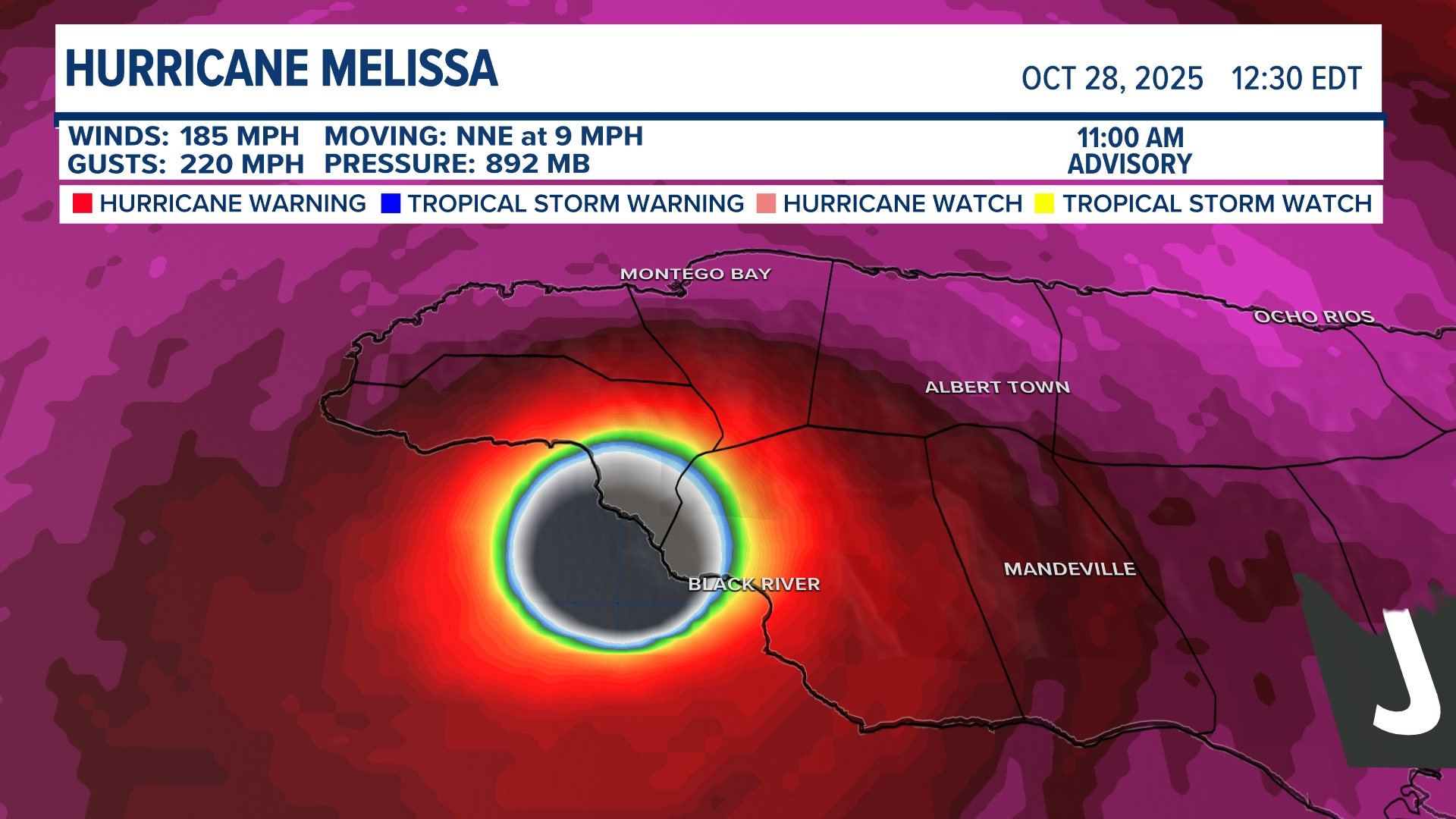
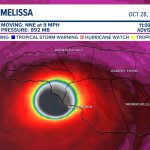
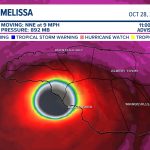
Hurricane Melissa has made history in the Atlantic.
The storm intensified rapidly and tied the record for the strongest sustained winds ever recorded in the Atlantic Basin, according to meteorologists monitoring the system.
The milestone places Melissa alongside the most powerful hurricanes ever observed in the region. Forecasters say the development is significant not only for its intensity, but for what it signals about conditions across the Atlantic this season.
Emergency officials are closely watching the storm’s track as it moves across open waters.
Hurricane Melissa: Key Facts at a Glance
| Event | Hurricane Melissa ties Atlantic wind record |
|---|---|
| Location | Atlantic Basin |
| Date | 2026 Hurricane Season |
| Who Is Affected | Coastal communities in projected path |
| Current Status | Active major hurricane |
| What Readers Should Know | Storm tied record for strongest sustained winds in Atlantic history |
Hurricane Melissa’s Record-Breaking Winds
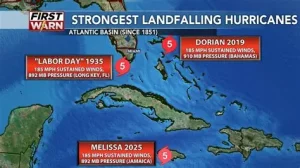
Meteorologists confirmed that Hurricane Melissa reached sustained wind speeds that match the strongest ever recorded in the Atlantic Basin.
The Atlantic Basin includes the Atlantic Ocean, Caribbean Sea, and Gulf of Mexico. Wind records in this region date back decades, with only a small number of storms reaching the highest Category 5 threshold.
According to data from the National Hurricane Center, Melissa’s peak sustained winds reached the same benchmark as previous record-holding storms.
“This is an extraordinary level of intensification,” a National Hurricane Center spokesperson said during a briefing. “We rarely see storms maintain winds at this magnitude for any period of time.”
The record refers specifically to maximum sustained winds, not gusts.
Rapid Intensification Over Warm Atlantic Waters
Hurricane Melissa strengthened quickly over unusually warm ocean waters.
Meteorologists describe the process as rapid intensification — a sharp increase in wind speeds over a short time. In Melissa’s case, favorable atmospheric conditions and minimal wind shear allowed the storm to organize and strengthen without disruption.
Warmer sea surface temperatures often provide additional energy to hurricanes, fueling stronger convection and lower central pressure.
Dr. Michael Brennan, director of the National Hurricane Center, said in a televised update, “When the ocean heat content is this high and upper-level winds remain light, storms can intensify very quickly. That’s what we observed with Melissa.”
Rapid intensification has become a growing focus of hurricane research due to the challenges it poses for emergency planning.
Atlantic Hurricane Records: Where Melissa Fits
The Atlantic Basin has seen several historically intense hurricanes over the decades.
Only a limited number have reached the top end of the Category 5 scale, defined by sustained winds of at least 157 miles per hour.
Melissa now joins that group.
Climatologists point out that tying the wind record does not necessarily make Melissa the most destructive storm. Impact depends heavily on landfall location, storm surge, rainfall, and population density.
Still, wind intensity remains a primary benchmark for comparing storms historically.
“Hurricanes are measured in different ways,” said Phil Klotzbach, a hurricane researcher at Colorado State University. “But sustained wind speed is one of the clearest indicators of a storm’s raw power.”
Forecast Track and Potential Impact
As of the latest advisory, Hurricane Melissa remains over open water.
Forecast models show a potential path toward portions of the Caribbean and possibly the southeastern United States, though uncertainty remains several days out.
Officials have urged residents in vulnerable coastal areas to review emergency plans.
Even if the storm weakens before landfall, it could still bring dangerous storm surge, heavy rainfall, and life-threatening rip currents.
The National Hurricane Center emphasized that intensity fluctuations are possible. Major hurricanes can weaken or restrengthen depending on environmental conditions.
Public Reaction and Preparedness Efforts
News of Melissa tying the Atlantic wind record spread quickly across social media and weather platforms.
Emergency management agencies in several coastal states have begun preliminary coordination calls to review evacuation procedures and shelter readiness, should the forecast track shift closer to land.
Local officials are encouraging residents not to focus solely on wind speed categories.
“Category numbers don’t tell the whole story,” said one Gulf Coast emergency management director. “Storm surge and rainfall can be just as dangerous, sometimes more.”
Stores in some coastal communities reported early demand for bottled water, batteries, and fuel.
Why This Matters for the 2026 Hurricane Season
Melissa’s intensity is likely to draw renewed attention to forecasts for an active Atlantic hurricane season.
Forecasters earlier predicted above-average storm activity due to warm ocean temperatures and favorable atmospheric patterns.
A storm tying the all-time wind record so early in the season could signal volatile months ahead.
Climate researchers caution against attributing any single storm directly to broader climate trends. However, multiple studies show that warmer oceans increase the potential for higher-intensity hurricanes.
The combination of rapid intensification and record-level winds underscores the need for early preparedness messaging.
What Happens Next
The National Hurricane Center will continue issuing advisories every few hours.
Reconnaissance aircraft are flying into the storm to collect real-time data on wind speed, pressure, and structure.
Those measurements help refine forecast models and determine whether Melissa maintains its peak strength or begins to weaken.
Emergency officials are monitoring closely. Evacuation decisions, if necessary, would depend on track confidence in the coming days.
For now, the focus remains on preparedness and situational awareness.
Frequently Asked Questions (FAQ)
1. How strong is Hurricane Melissa?
Hurricane Melissa tied the record for strongest sustained winds ever recorded in the Atlantic Basin.
2. What does “Atlantic Basin” mean?
It refers to the Atlantic Ocean, Caribbean Sea, and Gulf of Mexico, where Atlantic hurricanes form and travel.
3. Has any hurricane been stronger?
Melissa matched the highest sustained wind speed recorded in the Atlantic Basin but did not exceed it.
4. Is Hurricane Melissa expected to make landfall?
Forecast models show possible paths toward populated areas, but the exact track remains uncertain.
5. What should coastal residents do?
Residents should monitor official updates from the National Hurricane Center and review emergency preparedness plans.
6. Does tying the wind record mean it will be the most destructive storm?
Not necessarily. Damage depends on landfall location, storm surge, rainfall, and infrastructure vulnerability.
Closing
Hurricane Melissa has already secured its place in Atlantic hurricane history by matching the strongest sustained winds ever recorded in the basin.
Whether it ultimately impacts land remains to be seen. Forecast updates over the next several days will provide clearer guidance on the storm’s path and strength.
For now, coastal communities are being urged to stay informed and prepared as the 2026 Atlantic hurricane season continues.




Leave a Comment