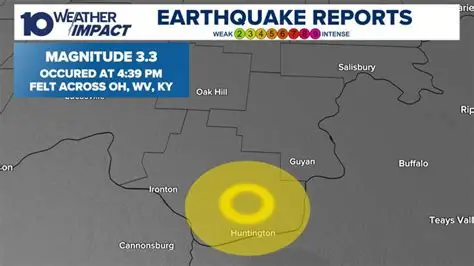
A minor earthquake was recorded in Lexington County this week.
The U.S. Geological Survey confirmed a magnitude 3.0 tremor in the area, drawing reports from residents who said they felt brief shaking.
While no significant damage has been reported, the quake has renewed attention on seismic activity in the region. Even small earthquakes can be unsettling, particularly in communities not accustomed to frequent tremors.
Authorities say the event appears to be minor, but monitoring continues.
Earthquake in Lexington County: Key Facts
| Event | 3.0 Magnitude Earthquake |
|---|---|
| Location | Lexington County, South Carolina |
| Date | 2026 |
| Who Is Affected | Local residents in surrounding communities |
| Current Status | No major damage reported |
| What Readers Should Know | Minor quake felt; USGS monitoring for aftershocks |
Where the Earthquake Occurred
According to the United States Geological Survey, the magnitude 3.0 earthquake struck in Lexington County, South Carolina.
The epicenter was located near residential areas, which explains why several residents reported feeling the tremor despite its relatively low magnitude.
Earthquakes of this size are generally considered minor. They can be felt but rarely cause structural damage.
The USGS tracks seismic activity nationwide using an extensive monitoring network.

Timeline of the Lexington County Quake
Preliminary data show the earthquake occurred at a shallow depth, which can make even a small tremor more noticeable at the surface.
Within minutes of the event, residents began submitting reports to the USGS “Did You Feel It?” system.
Emergency services did not immediately report injuries or significant property damage.
Local officials said they are reviewing infrastructure as a precaution.
“Right now, we have no reports of structural issues,” a Lexington County emergency management spokesperson said. “But we’re asking residents to report anything unusual.”
How Strong Is a 3.0 Magnitude Earthquake?
On the Richter scale, a 3.0 magnitude earthquake is considered minor.
It may feel like a passing truck or a brief jolt. Hanging objects can sway slightly. Windows may rattle.
Damage is uncommon at this level.
Still, the experience can be startling, particularly in parts of South Carolina where earthquakes are not an everyday occurrence.
Seismologists note that the Southeast has a history of intraplate earthquakes, including the powerful 1886 Charleston earthquake.
Dr. Susan Hough, a seismologist with the USGS, has previously explained that “even regions not known for frequent earthquakes can experience measurable seismic activity from time to time.”
Seismic Activity in South Carolina
South Carolina has experienced earthquakes in the past, though most are small.
The state sits within a region of ancient fault lines. While not as active as California, these faults can occasionally produce tremors.
Lexington County has recorded minor seismic activity before, but events above magnitude 3.0 are relatively infrequent.
The 3.0 quake serves as a reminder that earthquakes can occur outside traditional high-risk zones.
Emergency planners emphasize preparedness, even in lower-risk regions.
Public Reaction After the Tremor
Social media posts began appearing shortly after the quake.
Residents described a quick shake, a loud rumble, or a sudden vibration.
Some initially thought it was construction or heavy traffic.
“It felt like something hit the side of the house,” one resident wrote in an online community forum.
Another said, “It only lasted a couple of seconds, but it definitely got my attention.”
Emergency officials urged calm, reiterating that minor earthquakes are typically not cause for alarm.
Are Aftershocks Expected?
Aftershocks sometimes follow even small earthquakes.
The USGS has not confirmed any significant aftershocks tied to this event as of the latest update.
Seismologists say that if aftershocks occur, they are likely to be smaller than the original quake.
Monitoring equipment remains active in the region to track any additional seismic movement.
What Residents Should Do After a Minor Earthquake
Authorities recommend checking homes for visible cracks or damage, especially around foundations and chimneys.
Residents are encouraged to secure heavy furniture and review emergency plans.
Basic preparedness steps include keeping a flashlight, water, and a first-aid kit accessible.
“Preparedness doesn’t mean panic,” an emergency management official said. “It just means being aware.”
What Happens Next
The USGS will continue to analyze seismic data from the event.
Preliminary magnitudes sometimes undergo slight revisions after further review.
Local officials say there is no immediate threat but will remain in contact with state emergency management agencies.
For now, daily activities in Lexington County have resumed without disruption.
Frequently Asked Questions (FAQ)
1. Where did the earthquake occur?
The earthquake was recorded in Lexington County, South Carolina.
2. How strong was the quake?
It measured magnitude 3.0, which is considered minor.
3. Was there any damage?
As of now, no major damage or injuries have been reported.
4. Are aftershocks expected?
Small aftershocks are possible, but none significant have been confirmed.
5. Is South Carolina prone to earthquakes?
While not as active as California, South Carolina has experienced earthquakes in the past.
6. What should residents do after a minor earthquake?
Check for visible damage, secure heavy objects, and stay informed through official updates.
Closing
A 3.0 magnitude earthquake in Lexington County caused brief concern but no major disruption, according to the United States Geological Survey.
The event serves as a reminder that seismic activity can occur even in regions not widely known for earthquakes.
Officials continue monitoring the area. Residents are encouraged to stay informed and follow guidance from local authorities as more data becomes available.






Leave a Comment