
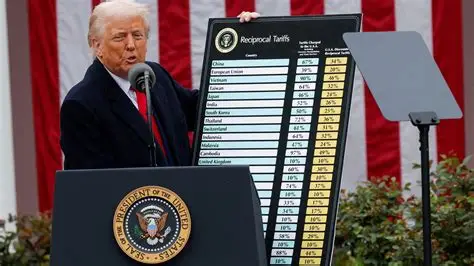
Bitcoin slid as much as 5% in volatile trading after new tariff moves tied to former President Donald Trump added fresh uncertainty to global markets.
The decline came as investors reacted to renewed trade policy tensions, prompting a broader pullback in risk-sensitive assets, including cryptocurrencies.
Digital asset traders have been closely tracking geopolitical and economic signals in recent weeks. The latest tariff developments injected another layer of unpredictability into already cautious markets.
While Bitcoin remains well above long-term lows, the sudden drop underscores how macroeconomic headlines continue to influence crypto prices.
Bitcoin Price Drops Amid Trade Policy Concerns
Bitcoin fell sharply during intraday trading, at one point losing roughly 5% before trimming some losses.
The sell-off followed developments related to tariff measures associated with former President Donald Trump, which raised concerns about renewed trade friction.
Market participants often view cryptocurrencies as speculative assets, meaning they can react quickly to uncertainty in global financial conditions.
“When trade tensions rise, investors typically reduce exposure to riskier assets,” said Marcus Levin, chief market strategist at a digital asset advisory firm. “Bitcoin has become increasingly sensitive to macro headlines.”
Ethereum and other major cryptocurrencies also recorded declines, reflecting broader pressure across the digital asset market.
Broader Market Reaction to Tariff Moves
Equity markets showed mixed reactions as investors evaluated the potential economic implications of tariff actions.
Some analysts said the renewed focus on trade policy could affect supply chains, inflation expectations and global growth projections.
“Tariffs influence cost structures across industries,” said Laura Chen, senior economist at an international research group. “Even the perception of escalating trade tensions can ripple through multiple markets.”
The uncertainty appears to have prompted short-term profit-taking in crypto markets, where price swings are often more pronounced.

Background: Bitcoin and Macro Volatility
Bitcoin has increasingly moved in tandem with traditional financial markets during periods of economic stress.
Initially promoted as a hedge against inflation and currency fluctuations, the cryptocurrency has, in practice, often behaved like a high-risk asset during episodes of global uncertainty.
When markets perceive potential disruptions to trade or monetary policy, digital assets frequently experience heightened volatility.
This pattern has been observed during past trade disputes, Federal Reserve policy shifts and geopolitical tensions.
Timeline of Events
-
Tariff Developments Announced: Trade policy headlines emerge tied to Trump-era measures.
-
Market Reaction Begins: Equity futures and global assets show cautious movement.
-
Bitcoin Slides: Cryptocurrency drops as much as 5% in intraday trading.
-
Partial Stabilization: Prices recover modestly but remain below prior levels.
Analysts note that crypto markets operate around the clock, often amplifying immediate reactions to breaking news.
Investor Sentiment and Market Volatility
Trading volumes spiked as Bitcoin’s price declined, suggesting active repositioning by investors.
Short-term traders appeared to lock in gains following recent upward momentum, while longer-term holders largely maintained positions, according to blockchain data analysts.
“Volatility is part of the crypto landscape,” said Daniel Ruiz, portfolio manager at a digital asset fund. “Macro headlines like tariff policy shifts can act as catalysts, but the market often stabilizes once the initial shock fades.”
Bitcoin remains one of the most actively traded cryptocurrencies globally, and daily price swings of several percentage points are not uncommon.
Impact on Retail and Institutional Investors
Retail investors may feel immediate pressure during sharp pullbacks, particularly those who entered positions at recent highs.
Institutional investors, including hedge funds and asset managers, have increasingly integrated Bitcoin into diversified portfolios. Analysts say their response often depends on broader market strategy rather than single headlines.
While a 5% move is significant, it falls within historical volatility ranges for the asset.
Still, the timing — linked to trade policy uncertainty — reinforces how interconnected crypto markets have become with traditional economic developments.
Key Facts at a Glance
| Event | Location | Date | Who Is Affected | Current Status | What Readers Should Know |
|---|---|---|---|---|---|
| Bitcoin Price Drop | Global crypto markets | Recent trading session | Crypto investors | Down up to 5% | Linked to tariff-related uncertainty |
| Tariff Developments | United States | Recent | Businesses, investors | Under review | Trade tensions affecting markets |
| Broader Market Reaction | Global equities | Same session | Traders, institutions | Mixed | Risk assets facing volatility |
| Crypto Market Volatility | Worldwide | Ongoing | Digital asset holders | Elevated | Price swings remain common |
What Happens Next?
Investors are likely to monitor further developments in trade policy and broader economic indicators.
Any clarification or easing of tariff concerns could influence market sentiment in the coming sessions.
Crypto analysts say attention will also remain on technical price levels and institutional flows, which can shape short-term momentum.
Market conditions may remain volatile as traders digest new information.
Frequently Asked Questions
Why did Bitcoin fall 5%?
Bitcoin dropped amid uncertainty related to new tariff moves tied to former President Donald Trump, which unsettled financial markets.
Are other cryptocurrencies affected?
Yes. Ethereum and several other major digital assets also experienced declines.
Do tariffs directly impact Bitcoin?
Tariffs do not directly regulate cryptocurrency, but trade tensions can influence investor sentiment and risk appetite.
Is this a major crash?
A 5% move is notable but falls within typical volatility ranges for Bitcoin.
Could prices recover quickly?
Crypto markets often rebound after sharp moves, though recovery depends on broader economic conditions.
Should investors expect more volatility?
Market analysts say volatility may continue as traders react to trade policy updates and global economic signals.
Closing
Bitcoin’s decline following tariff-related developments highlights the cryptocurrency market’s sensitivity to global economic headlines.
While prices partially stabilized after the initial drop, uncertainty surrounding trade policy continues to influence investor behavior.
Market participants will watch for additional clarity on tariffs and broader economic indicators as trading continues in the days ahead.




Leave a Comment