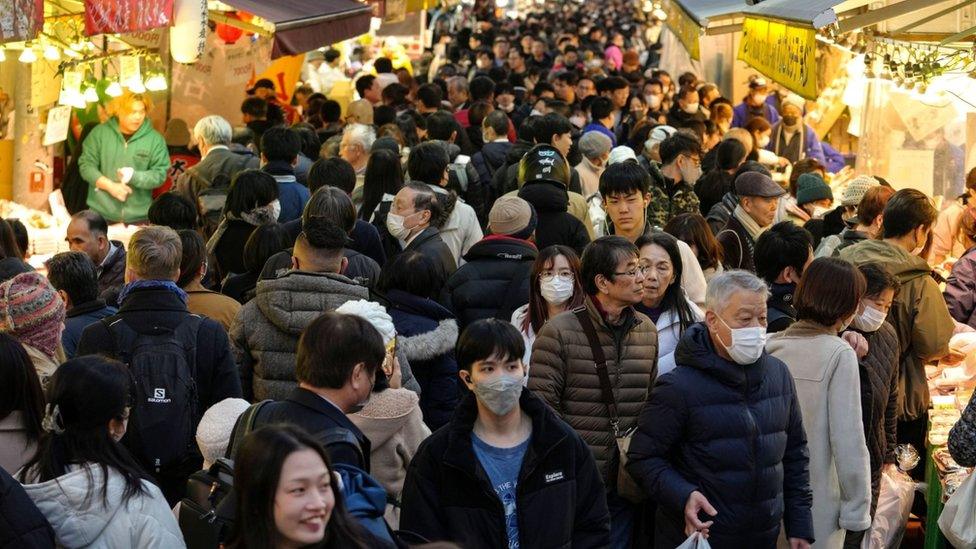
Japan has narrowly avoided slipping into a technical recession.
New economic data show the country returned to growth in the fourth quarter, reversing earlier contractions.
However, the rebound was weaker than economists had anticipated, raising fresh questions about the pace of recovery in the world’s third-largest economy.
The update matters not just for Japan but for global markets closely watching Asia’s economic outlook.
Key Facts at a Glance
| Event | Location | Date Released | Who Is Affected | Current Status | What Readers Should Know |
|---|---|---|---|---|---|
| Japan Q4 GDP Growth Report | Japan | Latest quarterly release | Businesses, investors, global markets | Economy expanded in Q4 | Growth weaker than expected; recession avoided |
| Technical Recession Avoided | Nationwide | Following two prior weak quarters | Households, policymakers | No longer in contraction | Momentum remains fragile |
Japan GDP Growth: What the Latest Data Shows
Japan’s economy expanded in the fourth quarter, avoiding what economists call a “technical recession,” defined as two consecutive quarters of contraction.
Earlier data had shown weakness, fueling concerns that Japan might formally enter recession territory. The latest figures indicate modest growth instead.
Still, the expansion fell short of market expectations.
An official from Japan’s Cabinet Office said the data reflect “gradual improvement in economic activity, though momentum remains moderate.”
Investors had hoped for stronger gains, particularly given recent policy shifts and global demand trends.
Background: Why Japan’s Economy Has Been Under Pressure
Japan’s economy has faced persistent headwinds over the past year.
Domestic consumption has been uneven, partly due to rising living costs. External demand has also fluctuated as global trade slowed.
The Bank of Japan has maintained a cautious monetary policy stance, even as other major central banks tightened rates to combat inflation.
“Japan’s recovery has been more fragile compared to the U.S. or parts of Europe,” said Marcel Thieliant, head of Asia-Pacific at Capital Economics. “Growth is positive, but not robust.”
Structural challenges, including an aging population and labor shortages, continue to weigh on long-term expansion.
Timeline: From Contraction to Modest Recovery
Previous Quarters Show Weakness
Japan recorded economic contractions in earlier quarters, triggering concern about a potential recession.
Consumer Spending Slows
Household spending declined amid higher prices and cautious sentiment.
Export Volatility
Fluctuations in global demand affected Japan’s export-driven industries.
Fourth Quarter Returns to Growth
The latest GDP report shows expansion, technically ending recession fears — for now.
While positive, the recovery did not match economists’ forecasts.
What Is a Technical Recession?
A technical recession typically occurs when an economy contracts for two consecutive quarters.
Japan appeared close to meeting that definition after earlier declines.
The fourth-quarter growth figure interrupted that streak.
Still, analysts caution that avoiding a recession label does not necessarily signal strong economic health.
“Escaping a technical recession is significant symbolically,” said a Tokyo-based market strategist. “But the underlying numbers suggest the economy is still moving slowly.”
Impact on Global Markets and Investors
Japan plays a central role in Asia’s economy and remains a major global exporter.
Weak or uneven growth can ripple through supply chains and currency markets.
The yen has experienced volatility in recent months as investors weigh economic data and monetary policy signals from the Bank of Japan.
Financial markets reacted cautiously to the latest report, with analysts parsing details on consumer demand and business investment.
For multinational companies operating in Japan, modest growth may signal steady but restrained business conditions.
Official Response and Policy Outlook
Japanese officials have emphasized stability and gradual improvement.
The Cabinet Office described the economy as “recovering moderately,” though it acknowledged ongoing risks.
The Bank of Japan has indicated it will monitor inflation trends and wage growth before making significant policy changes.
“We will continue to carefully assess economic conditions and price developments,” a Bank of Japan official said in a recent briefing.
Policy adjustments could depend on whether domestic demand strengthens in coming quarters.
Public Reaction and Business Sentiment
Business leaders have expressed cautious optimism.
Some manufacturers report stabilization in supply chains, while service-sector companies point to mixed consumer spending patterns.
Consumers, however, remain sensitive to price increases.
Retail sales data in recent months have reflected uneven demand, suggesting households are still adjusting to higher living costs.
Economists note that sustained wage growth could support stronger consumption later in the year.
What Happens Next for Japan’s Economy?
Much will depend on domestic consumption and global trade conditions.
If exports stabilize and consumer confidence improves, growth could strengthen in future quarters.
However, external risks — including shifts in global interest rates and geopolitical tensions — may influence Japan’s outlook.
Upcoming economic indicators, including inflation data and wage reports, will provide clearer signals.
Analysts will also watch for any adjustments from the Bank of Japan regarding its monetary policy framework.
Frequently Asked Questions
Did Japan enter a recession?
No. Japan avoided a technical recession after returning to growth in the fourth quarter.
What is a technical recession?
It refers to two consecutive quarters of economic contraction.
Why did growth miss expectations?
Consumer spending and business investment were weaker than analysts had forecast.
How does this affect global markets?
Japan’s economic performance can influence currency markets, trade flows and investor sentiment across Asia.
What role does the Bank of Japan play?
The central bank sets monetary policy and may adjust interest rates or stimulus measures based on economic conditions.
Is Japan’s economy stable now?
Growth has resumed, but analysts describe the recovery as moderate rather than strong.
Closing
Japan’s latest GDP figures show the economy has avoided a technical recession, offering a measure of relief for policymakers and investors.
At the same time, the softer-than-expected rebound underscores ongoing challenges facing households and businesses.
Attention now turns to upcoming economic data and policy signals that may shape Japan’s trajectory in the months ahead.









Leave a Comment